


- The Product
The Literacy Path Solution
Built to address the real challenges of literacy instruction — through research, classroom partnerships, and a deep commitment to both teachers and students.
- The Product
See Literacy Path in Action
Find out how Literacy Path would solve these for your students and your school.
- Context
Built to Address the Real Challenges of Literacy Instruction
Literacy rates are declining, and while test scores reflect the impact, they don’t tell the whole story. The deeper issue is how students experience reading, and the growing demands placed on teachers to make instruction
effective.
Through our research and classroom partnerships, we identified three core challenges limiting literacy growth. Below, we outline each challenge and how Literacy Path is designed to solve it.
- Challenge 01
Disengaged Students
- The Problem
The Problem: Disengaged Students
Many students view reading as frustrating or disconnected from their interests. Without confidence, motivation, or meaningful engagement, practice is limited, and long-term growth stalls. Traditional tools offer activities, not experiences — and students know the difference.
- The Solution
The Solution: Built-In Engagement
Literacy Path embeds engagement directly into daily reading practice. Grounded in Science of Reading principles and an evidence-based engagement model, learning feels interactive and rewarding, helping students build confidence and intrinsic motivation to read. The BRAVE framework ensures every interaction builds a student's relationship with reading — not just their score.
- Challenge 02
Instructional Tools That Miss the Mark
- The Problem
The Problem: Instructional Tools That Miss the Mark
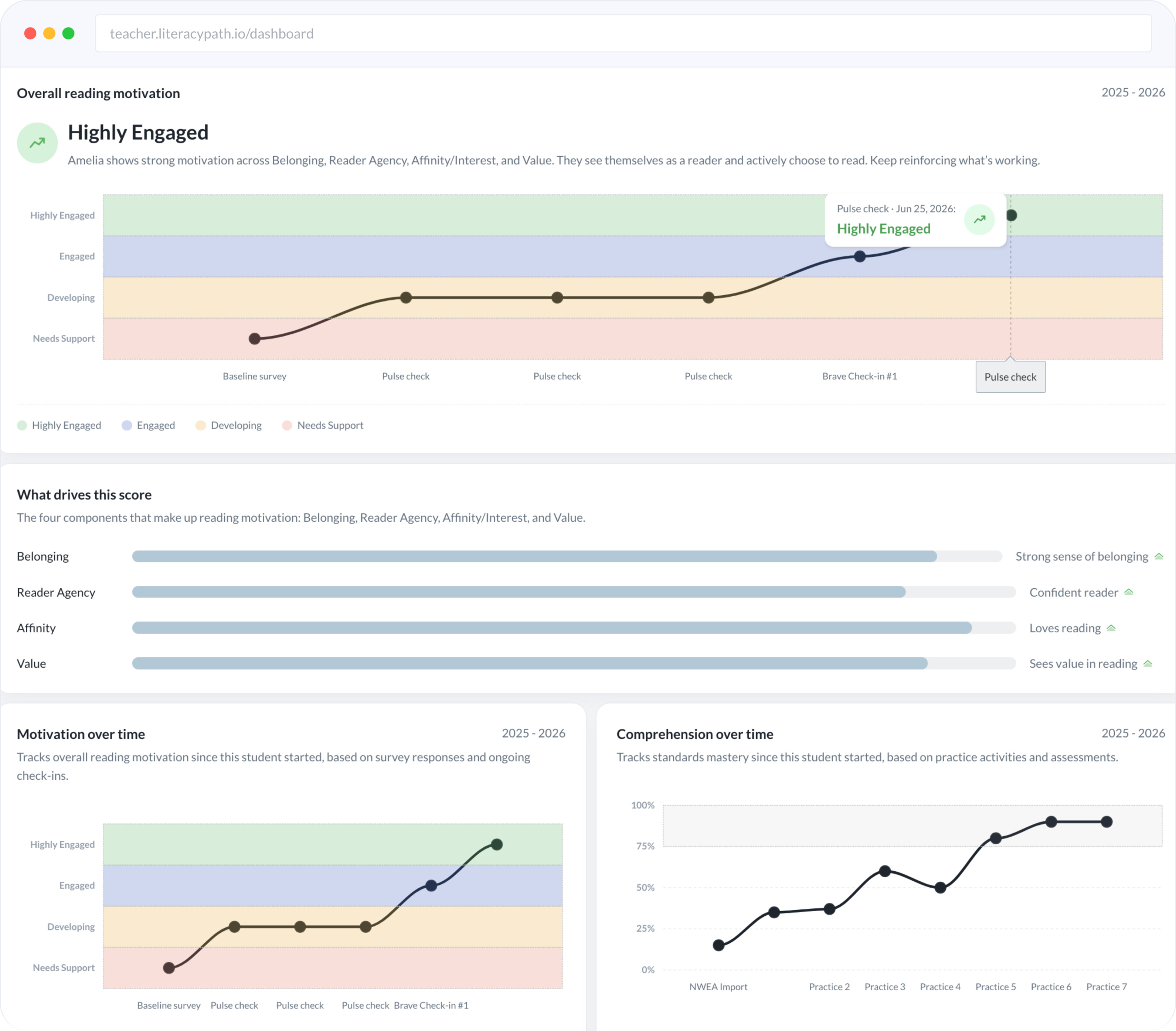
Too many literacy tools focus on completion or scores rather than mastery. Data is difficult to act on, and practice often fails to target students' actual skill gaps. Teachers are left with spreadsheets full of numbers but no clear path forward — and students repeat what they already know instead of learning what they need.
- The Solution
The Solution: Systematic, Personalized Practice
Literacy Path automatically adapts practice to each student's reading level and instructional needs. Real-time insights show teachers where students are and what to do next, maximizing instructional time and driving meaningful progress toward grade-level mastery. The system handles the personalization, grading, and sequencing — so teachers can focus on teaching.
- Challenge 03
Teacher Burnout
- The Problem
The Problem: Teacher Burnout
Teachers are expected to adopt new approaches, such as the Science of Reading, without the time, training, or support needed to implement them effectively — adding to planning demands and burnout. Every new tool becomes another thing to learn, another system to manage, and another source of fragmented data.
- The Solution
The Solution: Designed for Teachers
Science of Reading principles are built directly into Literacy Path, removing the guesswork from implementation. Personalization happens automatically, skill-building fits into existing routines, and teachers receive clear next steps without added workload. Literacy Path doesn't add to teachers' plates — it removes what was already there.
Together, these solutions change everything.
These three challenges lead to disengaged learners, overburdened educators, and practice time that falls short of its potential. Literacy Path was built to change that — by embedding motivation into practice, supporting differentiated instruction, and making literacy instruction simpler, more effective, and more sustainable.
